Thoughtful Ways to Include Traditions in Your Elopement
A practical guide to honoring culture, identity, and tradition in your modern elopement
When planning an elopement, one of the most important decisions is which traditions you want to carry with you into the day.
Without the structure of a traditional wedding, you have the flexibility to choose what actually matters. For many couples, that includes incorporating cultural or family traditions in a way that feels intentional rather than expected.
This guide walks through how to incorporate elopement traditions into a destination setting, adapt them, and ensure they feel personal and grounded.
Index
- Why traditions matter
- How to choose which wedding traditions to include
- Approaching elopement traditions with respect and intention
- Creating your own elopement traditions
- Examples of meaningful traditions
- Adapting wedding traditions for a destination setting
- Blending multiple backgrounds through elopement traditions
- Working with a planner who understands traditions
- Tips for intentional planning
- Planning your 2026 and beyond elopement
WHY ELOPEMENT TRADITIONS MATTER
Elopements are often chosen for their simplicity, but that does not mean they need to feel empty. Elopement traditions can add structure and meaning without requiring a large guest count or formal setting.
They can:
- Connect your experience to family history
- Create a sense of intention within the ceremony
- Acknowledge people who are not physically present
Including the right elopement traditions helps your day feel complete without adding unnecessary complexity.

HOW TO CHOOSE WHICH ELOPEMENT TRADITIONS TO INCLUDE
Not every tradition needs to be part of your elopement. The goal is to choose elopement traditions that feel relevant to you now.
Start by asking:
- Which traditions feel meaningful rather than expected
- Whether there are rituals tied to your family or background
- How each tradition will fit into your location and timeline
Keeping your focus narrow usually leads to a more intentional experience.
APPROACHING ELOPEMENT TRADITIONS WITH RESPECT AND INTENTION
As you explore different elopement traditions, it is important to approach them with awareness and respect, especially if they come from cultures outside your own.
Not every tradition is meant to be adopted freely or at all. Some carry deep spiritual, historical, or community-specific meaning that should be honored carefully.
A few guidelines to keep in mind:
- Understand the origin: Take time to learn where the tradition comes from and what it represents beyond the visual aspect
- Ask why you are including it: Choose elopement traditions because they are meaningful to you or your background, not just because they look appealing
- Avoid using sacred or closed practices: Some rituals, especially within Indigenous cultures, are not meant to be performed outside of that community
- Involve the right people when appropriate: If a tradition is part of your heritage, consider involving a family member, elder, or cultural practitioner
- Focus on connection over aesthetics: The goal is not to recreate a moment for photos, but to include something that genuinely reflects your story
Being intentional in this way ensures that your elopement traditions feel respectful, personal, and grounded rather than borrowed or performative.
If you are unsure about including a specific tradition, it is always better to pause, do more research, or choose an alternative that aligns more closely with your own experience or heritage.
CREATING YOUR OWN ELOPEMENT TRADITIONS
Not every couple has cultural or historical traditions they feel connected to, and that is completely valid. Elopement traditions do not have to come from a specific background to be meaningful.
Some of the most impactful traditions are the ones you create yourselves.
These can be based on your relationship, your values, or shared experiences rather than something inherited.
Examples of modern or personal elopement traditions:
- Reading letters to each other or from family
- Sharing a private meal or drink together after your ceremony
- Returning to a place that already has meaning in your relationship
- Writing and exchanging vows in a non-traditional format
- Including an activity you both care about, like hiking, swimming, or traveling to a specific location
- Creating a ritual around something symbolic to your relationship, like planting something or exchanging objects
These types of elopement traditions often feel more natural because they are built around who you are rather than what is expected.
If you are not drawn to cultural traditions, focusing on personal ones can create the same level of intention without feeling forced.
EXAMPLES OF MEANINGFUL ELOPEMENT TRADITIONS
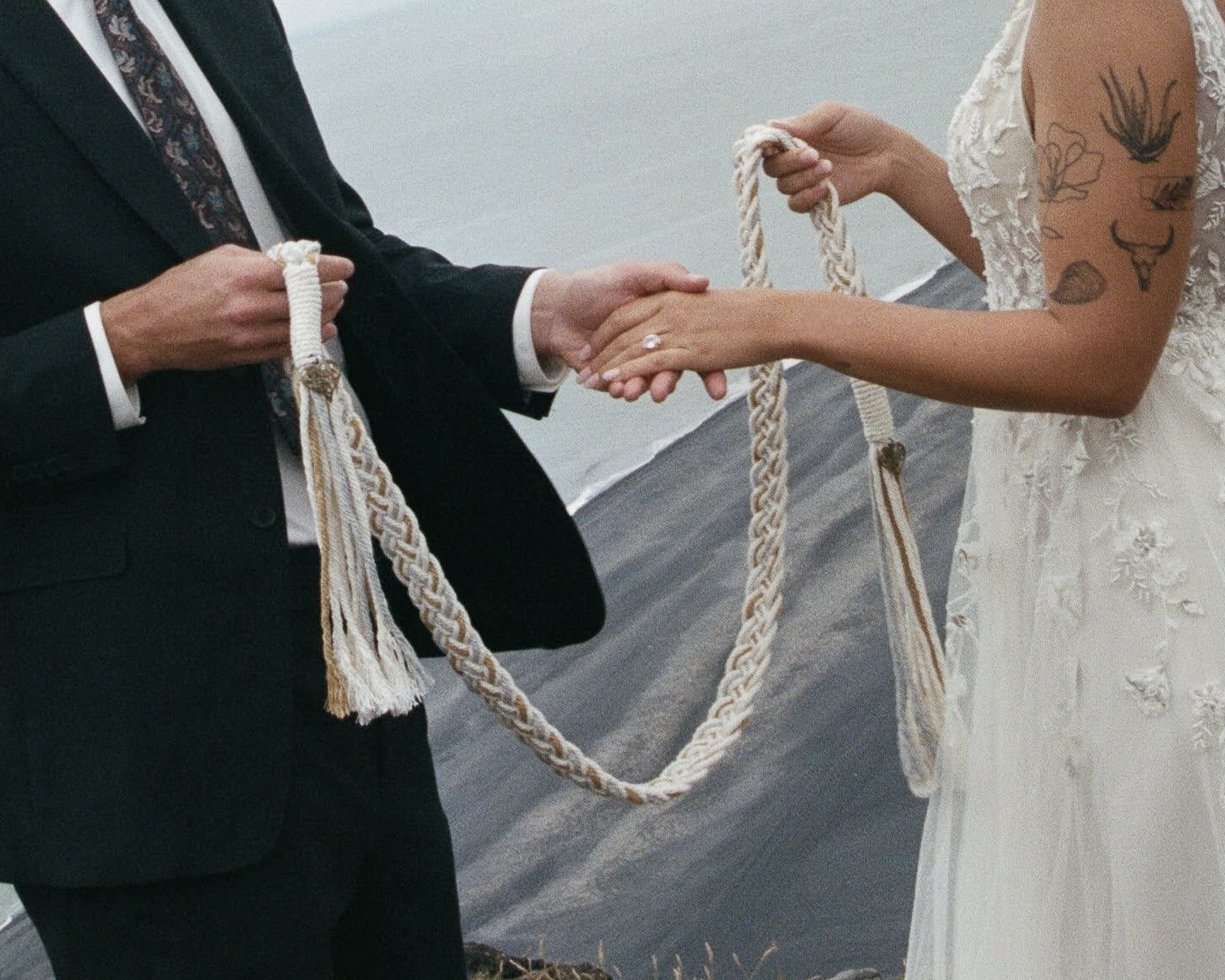
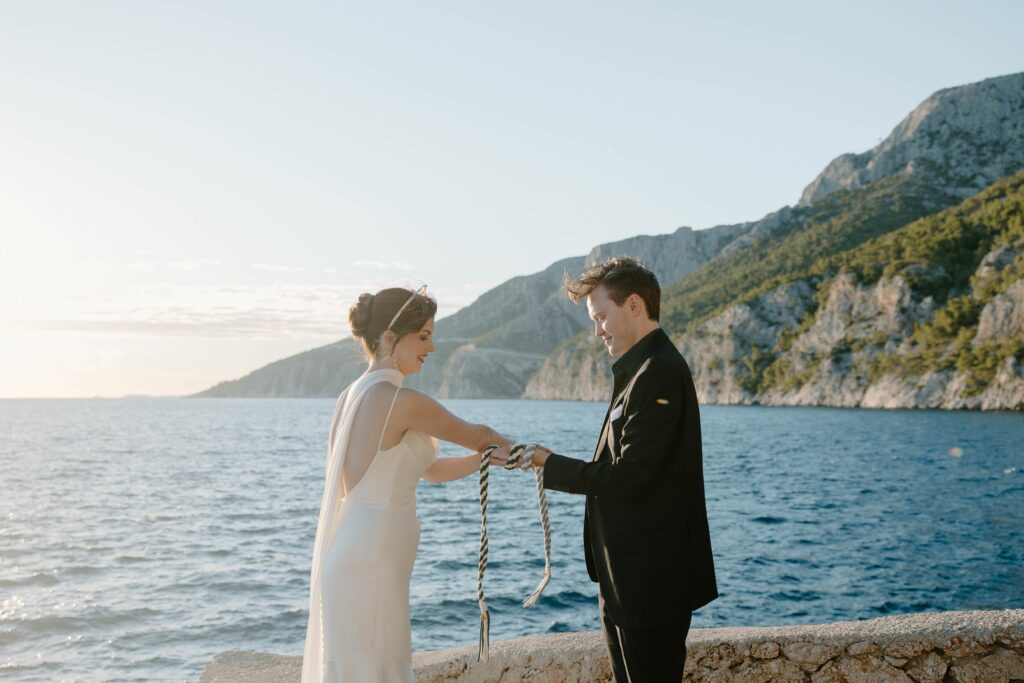
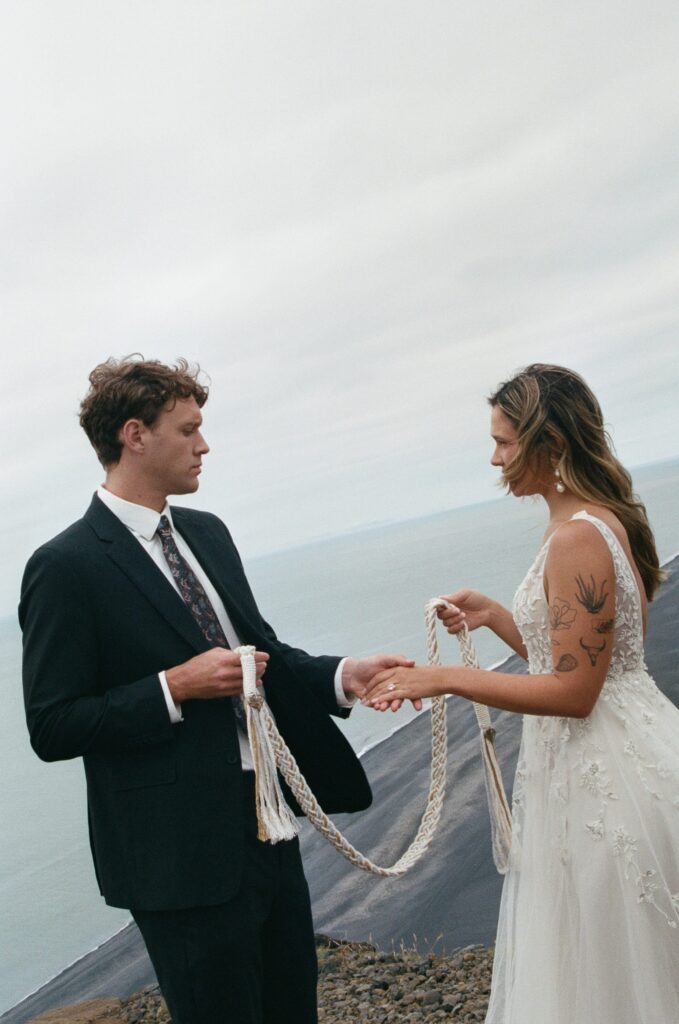
Handfasting ceremony
Handfasting originates from ancient Celtic traditions, primarily in Ireland and Scotland. Historically, it was used as a form of betrothal or trial marriage, where a couple’s hands were tied together to symbolize their commitment.
Today, it is one of the most adaptable wedding traditions and is often included as a symbolic unity ritual.
It works well in elopements because:
- It is simple and does not require additional people
- It can be personalized through fabric, color, or material with cultural or family significance
- It fits naturally into outdoor settings, which aligns with its historical roots
Many couples incorporate vows or assign meaning to each wrap, allowing the ritual to reflect both tradition and personal intention.
Jumping the broom
Jumping the broom is rooted in African and African American history, with documented use in West African communities and later among enslaved people in the United States. During slavery, when legal marriage was not recognized, this ritual became a way for couples to publicly affirm their union.
The act of jumping the broom symbolizes sweeping away the past and entering a new chapter together.
As one of the more historically significant traditions, it carries both cultural and generational meaning.
Couples often include it by:
- Bringing a broom that has been handcrafted or decorated with personal or cultural elements
- Placing it at the end of the ceremony
- Treating the jump as a clear transition into married life

OTHER CULTURAL RITUALS
There are many elopement traditions across cultures that can be thoughtfully adapted for a destination setting. Understanding their origins helps couples include them with intention.
Some examples include:
Tea ceremonies (Chinese and other East Asian cultures): Traditionally used to honor family and elders, symbolizing respect, gratitude, and the joining of two families.
Smudging rituals (Indigenous North American traditions): A spiritual practice that involves burning sacred herbs, such as sage, for cleansing and grounding. This should only be included with cultural understanding and respect.
Oathing Stone wedding ceremony (Scottish tradition): Couples place or step on a stone during the ceremony as a symbol of strength, unity, and lasting commitment. It can be adapted for a destination elopement by incorporating a meaningful stone into your vows.
Tying the knot (Hindu and South Asian traditions): In many South Asian cultures, the couple ties a ceremonial knot or uses threads to symbolize unity and commitment.
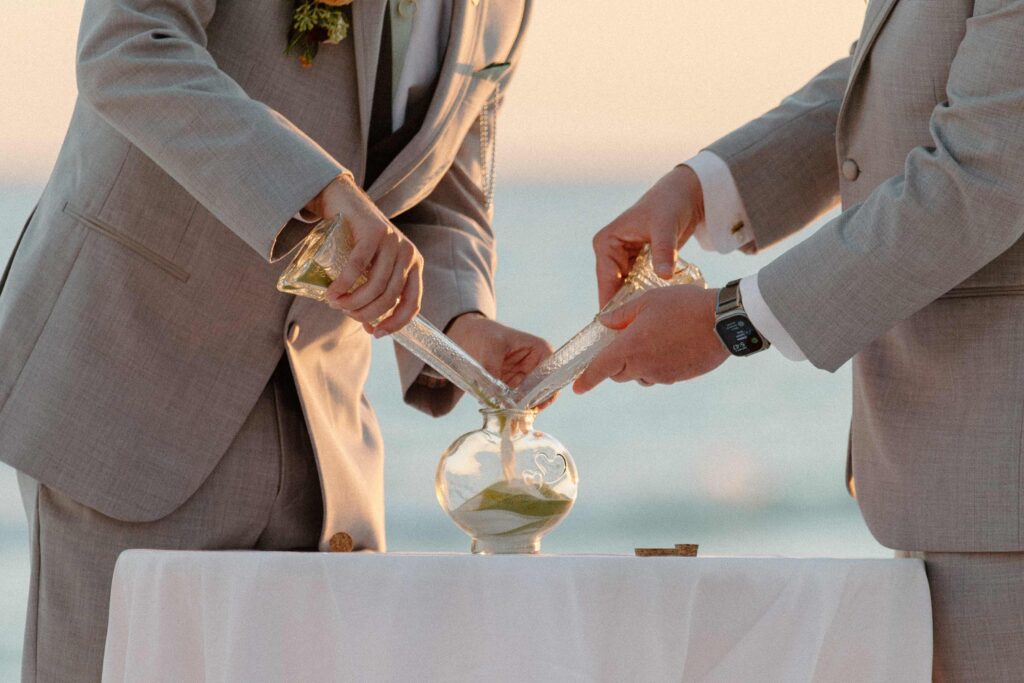
Unity rituals, such as sand or candles (Western wedding traditions): These became popular in the United States in the 20th century as symbolic acts representing two individuals joining together.
Wine- or sake-sharing rituals (Mediterranean and East Asian cultures): Pouring and sharing symbolic drinks can represent union, gratitude, and shared life in a private, intimate way.
Breaking the glass (Jewish tradition): Typically performed at the end of the ceremony to represent the fragility of life and the seriousness of commitment, often followed by celebration.
Blowing the Pū (Hawaiian tradition): The pū, or conch shell, is blown to mark the start of a ceremony and invite blessings. In a Hawaiian wedding, this symbolizes spiritual presence, respect for ancestors, and the sacredness of the union.
If you want to better understand the origins and context behind different traditions, resources like the Smithsonian offer helpful cultural background.
ADAPTING ELOPEMENT TRADITIONS FOR A DESTINATION SETTING
One of the main concerns couples have is how to include wedding traditions when they are far from home.
Most traditions can be adapted by focusing on their meaning rather than their scale.
Practical ways to do this:
- Bring small symbolic items or heirlooms
- Simplify the structure of the ritual
- Include family through letters or recordings
- Choose a location that aligns with the tone of the tradition
This approach keeps your traditions intact while adapting them to a new environment.
BLENDING MULTIPLE BACKGROUNDS THROUGH ELOPEMENT TRADITIONS
For couples with different backgrounds, wedding traditions can be a way to represent both people without needing separate ceremonies.
This might look like:
- Including more than one tradition within the ceremony
- Using different languages in vows or readings
- Incorporating music or clothing from each background
The focus should be on clarity and balance rather than trying to include everything.
WORKING WITH A PLANNER WHO UNDERSTANDS ELOPEMENT TRADITIONS
A planner can help you include elopement traditions in a way that feels structured and respectful.
Look for someone who:
- Takes time to understand the meaning behind each tradition
- Helps adapt traditions to your location
- Builds a timeline that allows space for each element
This ensures your traditions are integrated naturally into the day.
WHEN PLANNING YOUR ELOPEMENT TRADITIONS:
- Understand the meaning behind each ritual
- Avoid including traditions only for visual appeal
- Involve family or cultural advisors when appropriate
- Be open to adapting traditions to your setting
- Focus on what feels relevant to you
This keeps your elopement grounded and personal.
PLANNING YOUR 2026 AND BEYOND ELOPEMENT
Couples planning for 2026 and beyond are prioritizing experiences that feel intentional. Elopement traditions play a key role in making that happen.
With the flexibility of an elopement, you can build a day that reflects your values without following a set format.
READY TO START PLANNING?
If you want help incorporating elopement traditions into a destination experience in a way that feels clear and intentional, a custom planning session is a good place to start.